
Interpreting PROSTOX Results
Risk stratification into HIGH and LOW-AVERAGE risks of late genitourinary (GU) adverse events (AEs) by PROSTOX can help physicians and their patients decide on the safest course of radiation treatment.
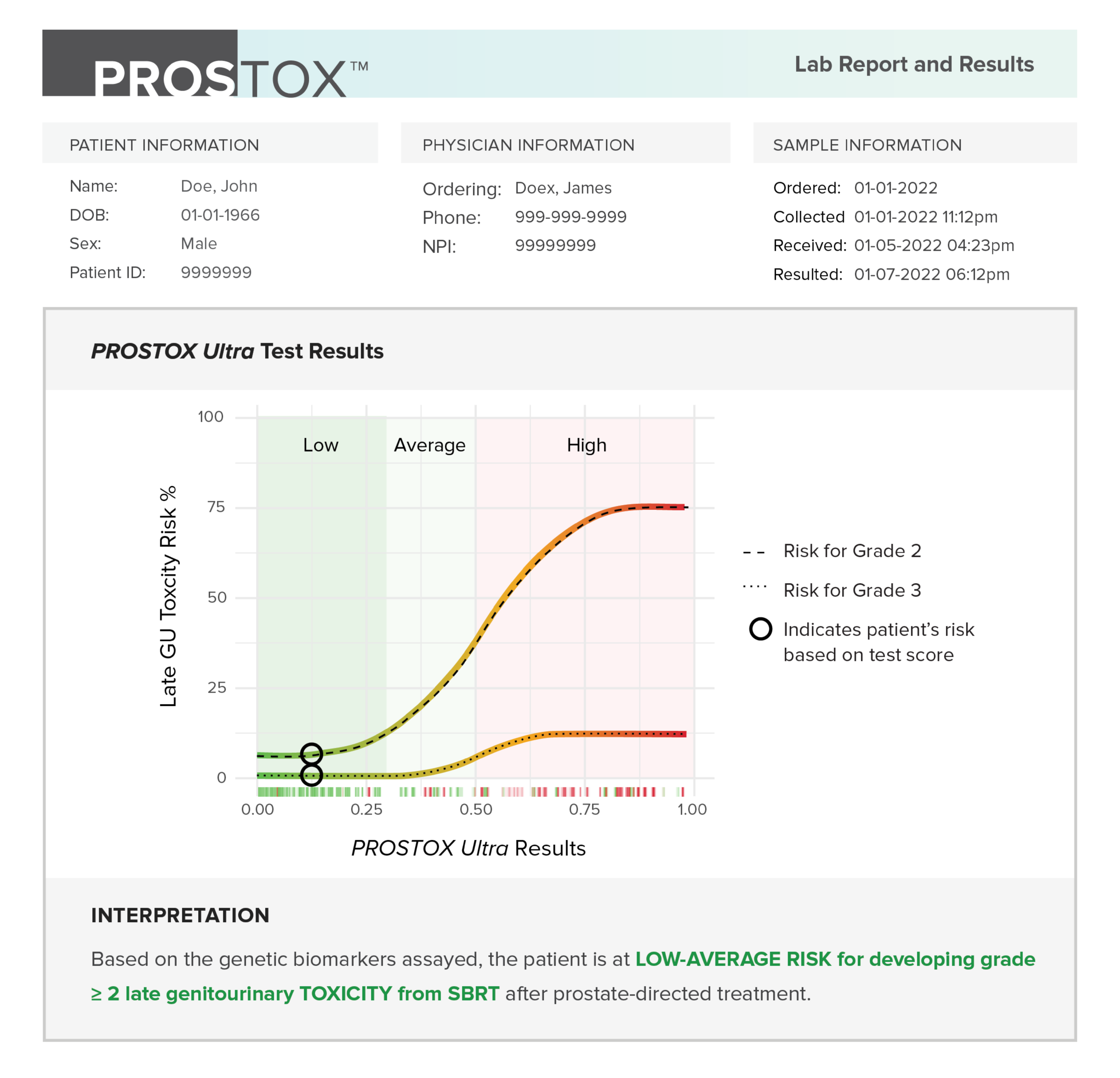
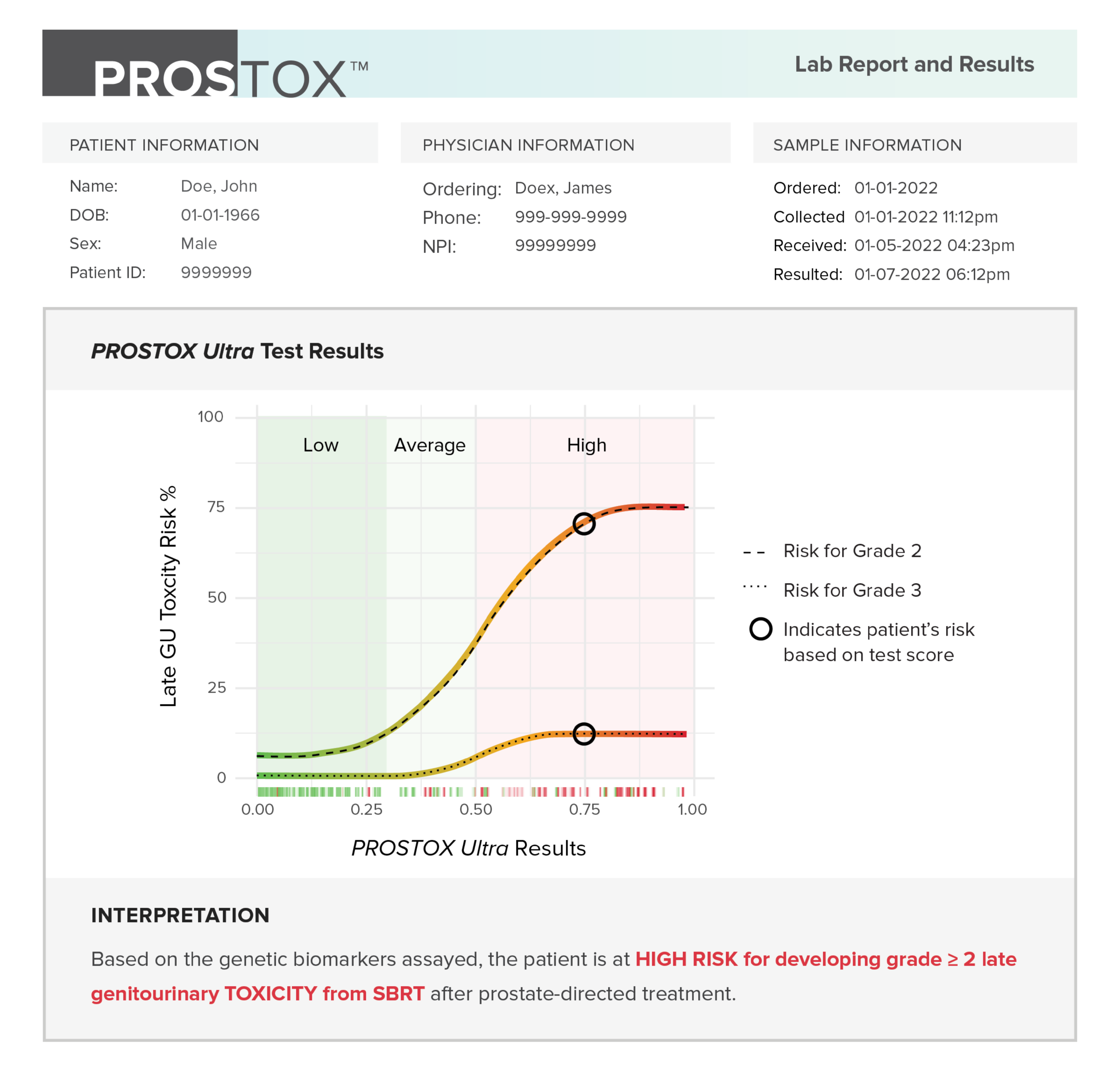
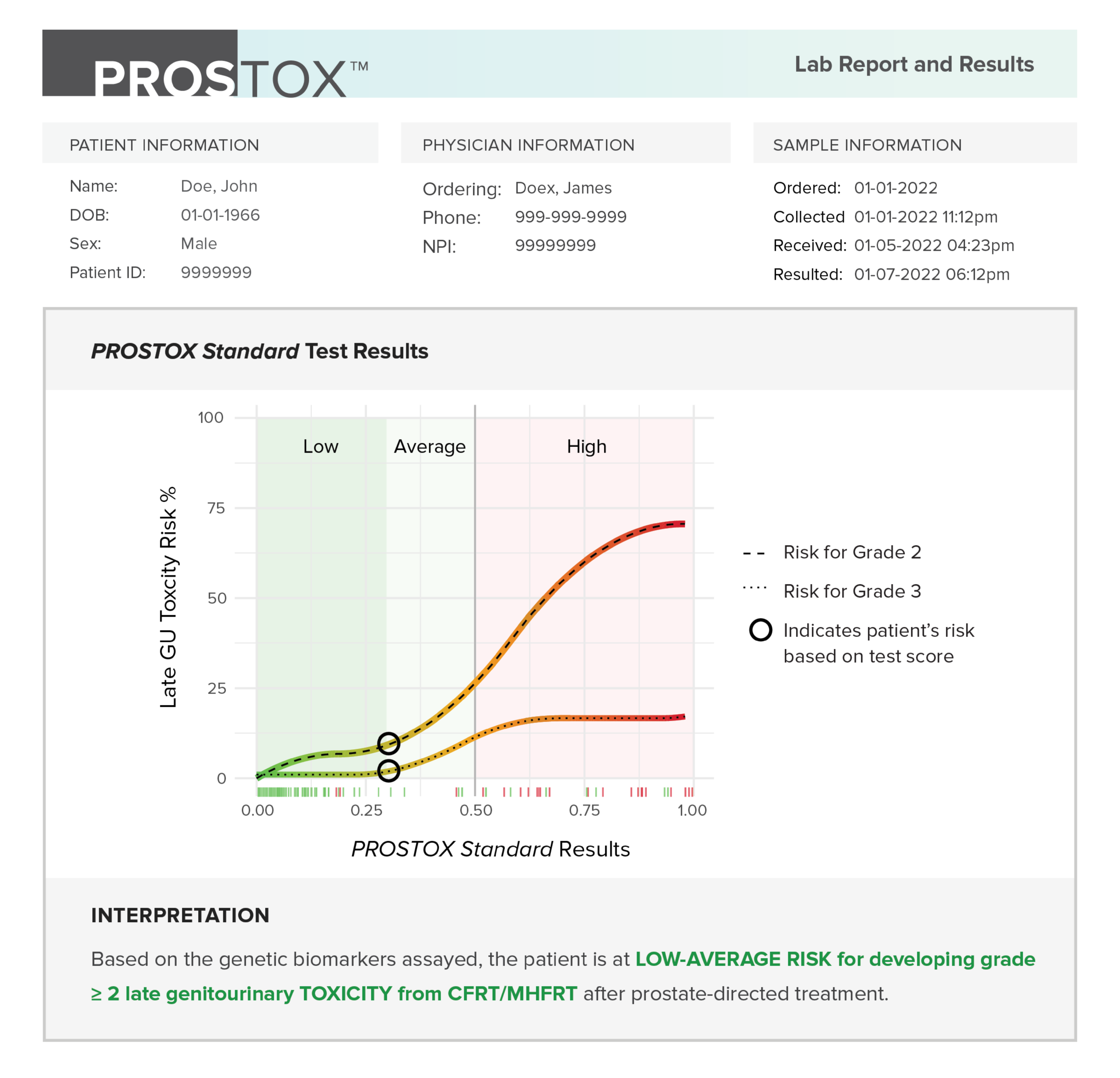
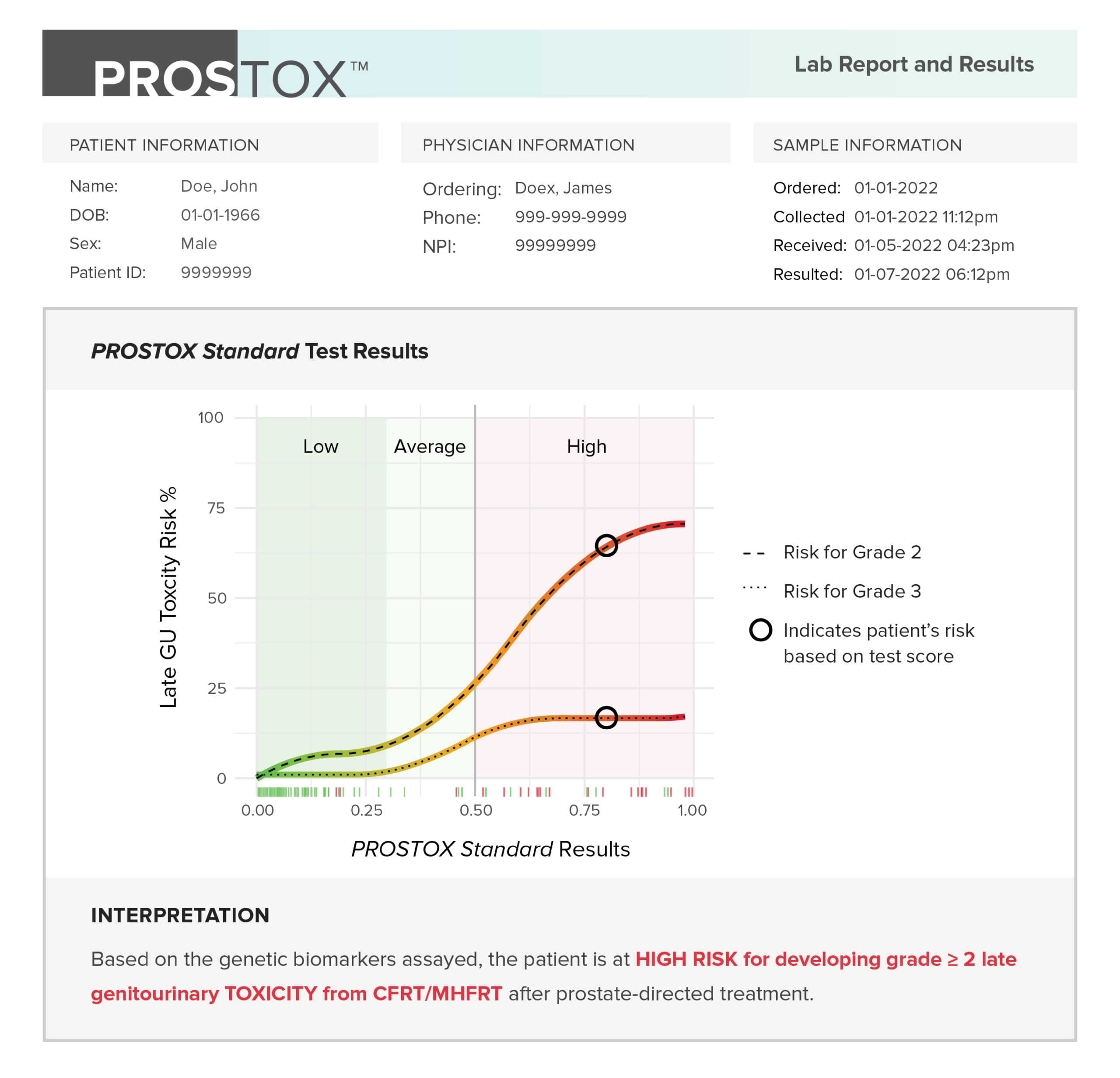
The patient report will show both a binary result (whether a patient is at LOW-AVERAGE RISK of GU AEs versus HIGH RISK) as well as a risk curve showing the patient’s precise risk relative to that of others who have been tested with known outcomes.
We will issue results approximately 5-7 days after receiving a patient’s sample. The treating or ordering physician will receive an email link to access the report in the physician portal.
PROSTOX Ultra
Patients with a HIGH RISK result have an Odds Ratio of ~36.2 for developing late grade ≥ 2 genitourinary AEs compared to those with a LOW-AVERAGE RISK result.1,2
Low-Average Risk Report
High Risk Report
PROSTOX Standard
Patients with a HIGH RISK result have an Odds Ratio of ~13.2 for developing late grade ≥ 2 genitourinary AEs compared to those with a LOW-AVERAGE RISK result.1,2
Low-Average Risk Report
High Risk Report
PROSTOX
References:
- Kishan A, McGreevy K, Telesca D, et al. Biomarkers for late genitourinary adverse events after GU AEs after radiotherapy for prostate cancer. Presented at ASTRO 2026 (Submitted).
- Kishan AU, Marco N, Schulz-Jaavall MB, et al. Germline variants disrupting microRNAs predict long-term genitourinary toxicity after prostate cancer radiation. Radiother Oncol. 2022;167:226-232. doi:10.1016/j.radonc.2021.12.040.